Dental Implants in Toowoomba
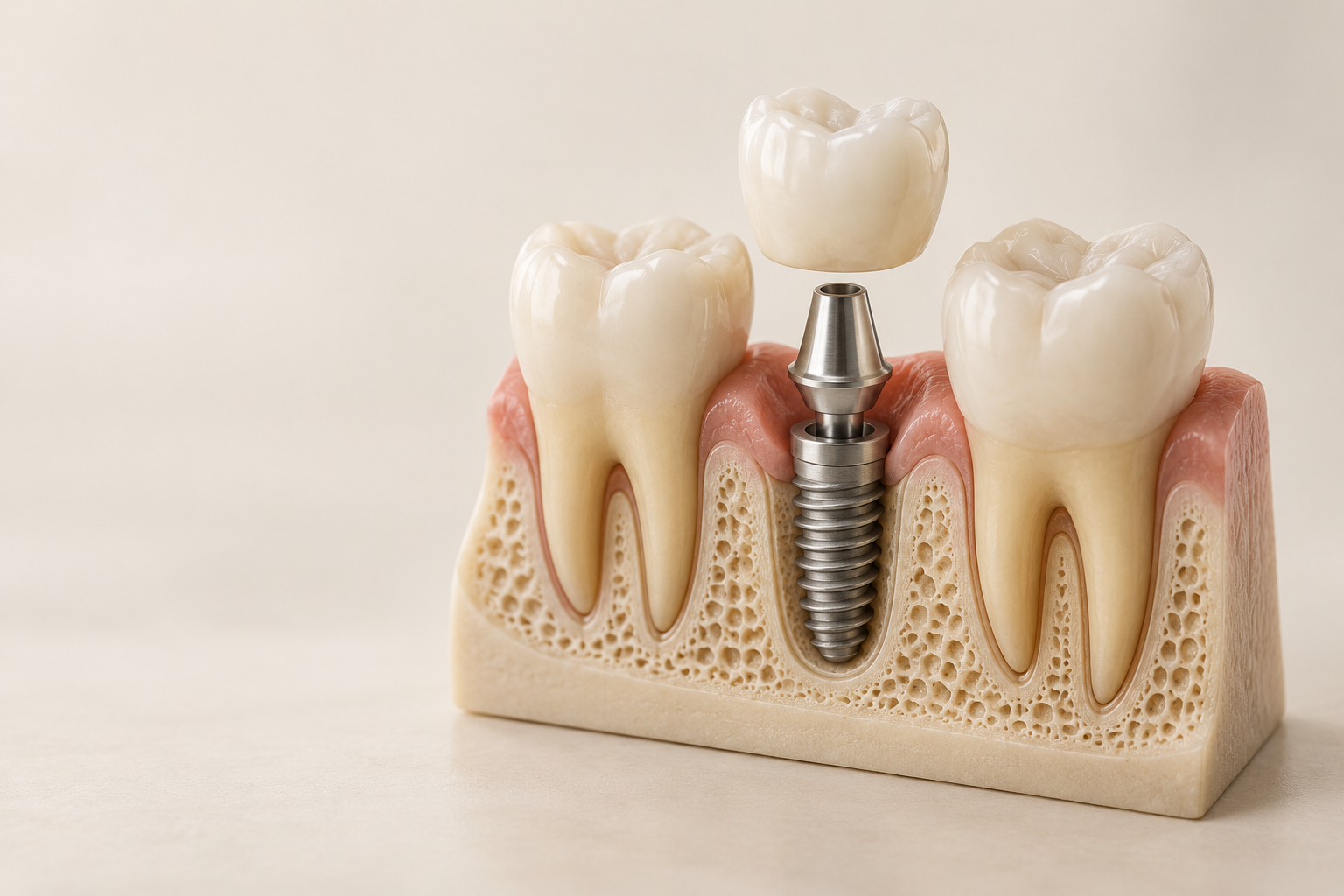
Missing teeth can change how you eat, speak and feel about your smile. Dental implants are one option for replacing them, with an implant placed in the jawbone to support a replacement tooth or teeth.
At Glenvale Dental, start with a consultation to understand your options, what treatment may involve and whether implants could suit you.
Is an Implant Right for You?
Dental implants may be worth considering if you have missing teeth and want to understand your replacement options.
One or More Missing Teeth
You have a gap after losing a tooth or having it removed. You want to explore a replacement that supports everyday chewing and fits in with your smile.
Difficulty Chewing
Missing teeth make some foods harder to manage, or you find yourself chewing mainly on one side. You’d like to understand whether implants could help restore a more comfortable bite.

Problems with Loose Dentures
Your dentures move when you eat or speak. An assessment can help determine why they feel unstable and whether implants or adjustments to your dentures may be appropriate.
For suitable patients, dental implants can improve how replacement teeth function and help restore the appearance of a smile.
Benefits of Dental Implants
More Support for Chewing
Implants anchor replacement teeth in the jawbone, providing support when you bite and chew. This can make eating easier when missing teeth have affected your bite.
Preserve Nearby Tooth Structure
An implant can replace a missing tooth without reshaping neighbouring teeth to support a conventional bridge. This can be useful when those teeth are healthy.
A Natural-Looking Replacement
Replacement teeth can be designed to complement the shape and colour of your surrounding teeth, helping a visible gap blend into your smile.
Greater Denture Stability
For suitable patients, implants can help secure a loose denture, reducing movement when eating or speaking. This may make everyday conversations and meals feel more comfortable.
Help Maintain Jawbone
Bone can shrink after a tooth is lost. An implant can help preserve bone around the replacement site, although it does not prevent all future bone loss.
Meet our Dentist
Get to know the people who’ll welcome you and care for you at Glenvale Dental.
Learn about our team’s backgrounds and approach to patient care before your first visit.

What Is The Dental Implants Process?
From your first conversation to ongoing care.


Consultation & Assessment
Tell us what’s been bothering you and what you hope to improve.
Your dentist will assess your oral health and discuss any imaging needed to find out whether dental implants could be suitable for you.


Understand Your Options
Before you decide, your dentist will explain the proposed treatment, alternatives, costs and expected timing.
You’ll have the opportunity to ask questions and understand the benefits and risks, including whether any preparatory treatment is needed.


Implant Placement & Healing
If you proceed, the implant is placed in your jawbone and given time to heal before the final replacement tooth is fitted. Your treating dentist will explain what to expect and how to care for the area.

Your New Tooth & Ongoing Care
Once healing is sufficient, your replacement tooth is fitted and its bite and fit are checked. You’ll receive guidance on cleaning and regular reviews to help care for your implant and the surrounding gums.
-
Dental implants may be an option for replacing missing teeth, but suitability depends on your individual assessment. Your dentist will review your gums, remaining teeth, jawbone and medical history. X-rays or additional imaging may be needed to plan treatment and identify any concerns that should be addressed first.
-
Dental implants can last many years, but they are not guaranteed to last a lifetime.
Gum health, smoking and daily cleaning can affect their longevity.
The replacement tooth and other components may also need maintenance or replacement over time, even when the implant remains stable.
-
Dental implant treatment usually takes several months and involves multiple appointments. The implant needs time to integrate with the surrounding bone.
Additional procedures and individual healing can extend the timeline.
Ask for an estimated schedule based on your treatment plan before making work or travel arrangements.
-
Bone loss does not automatically rule out dental implants, but there must be enough suitable bone to support them.
Your dentist will assess the proposed implant site and may recommend additional imaging.
Bone grafting may be considered in some cases, while others may require a different approach or an alternative to implants.
Frequently Asked Questions
-
Costs depend on how many teeth need replacing and whether additional treatment is needed.
A dental assessment will help determine the cost and what’s included.
Contact our team to ask about consultation fees and arrange an appointment.
-
Dental implant surgery is usually performed under local anaesthetic to numb the treatment area. Some discomfort, swelling or bruising can occur afterwards.
Your treating Gelnvale dentist will explain pain relief and recovery instructions. If you feel anxious about dental treatment, raise this before your procedure so your concerns can be discussed.
-
Possible risks include infection, failure of the implant to integrate with the bone, and damage to nearby structures such as nerves, teeth or the sinus.
Your dentist will explain the risks relevant to your situation before you decide whether to proceed.
-
Contact Glenvale Dental in Toowoomba and let our team know you would like to discuss replacing missing teeth. We can help you arrange an appropriate appointment and explain what to bring.
You do not need to choose a treatment before getting in touch. Bring your questions, a current medication list and any relevant dental records you have available.