
Dental Crowns in Toowoomba
Help a Damaged Tooth Last Longer.
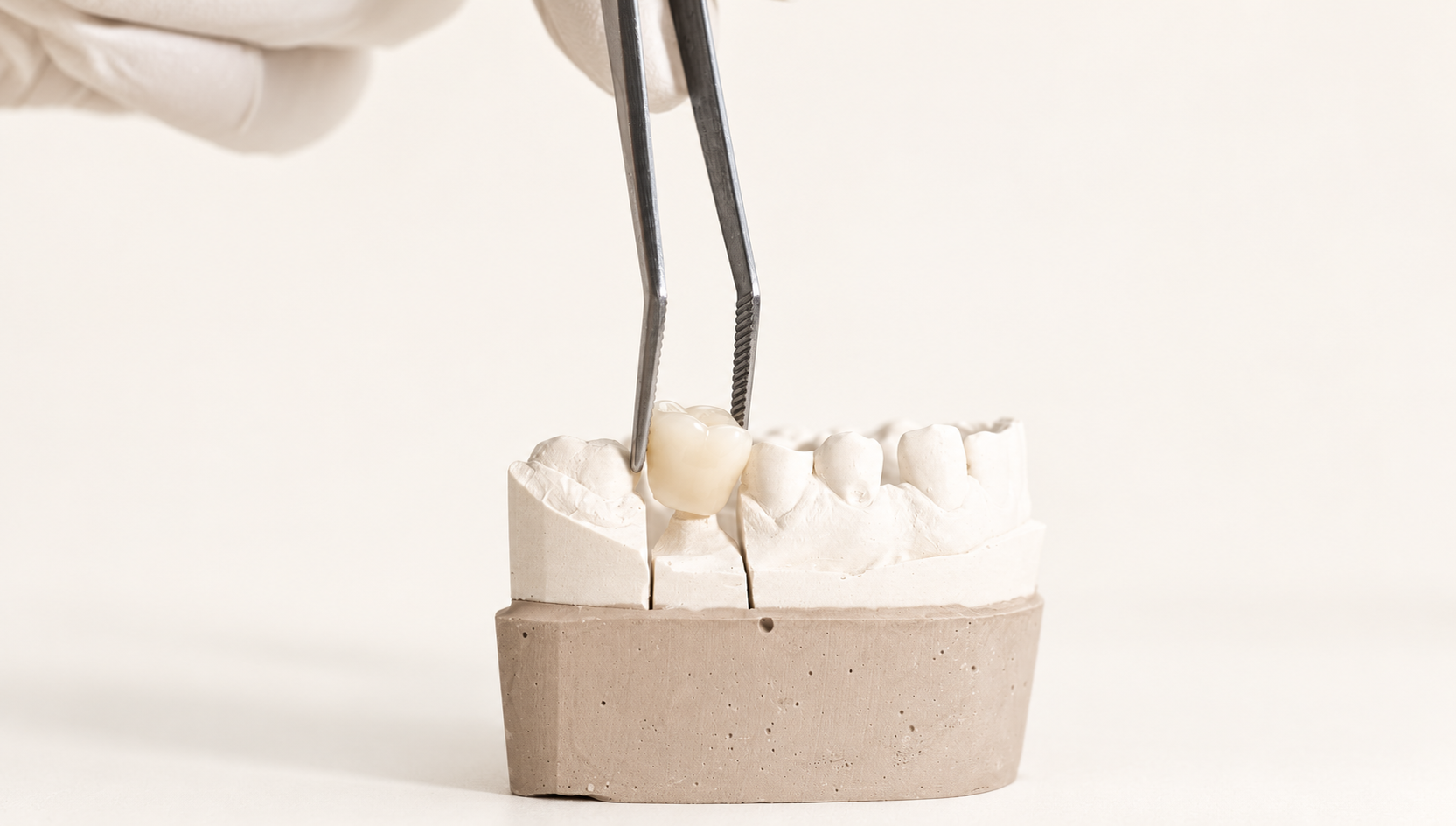
A dental crown is a custom-made cap that covers the visible part of a tooth. It can protect and restore a tooth weakened by damage, a large filling or significant wear when a filling alone may not provide enough support.
At Glenvale Dental, we assess how much healthy tooth remains and explain whether a crown is appropriate, what treatment involves and the costs before you decide.
Is a Dental Crown Right for You?
A crown may be recommended when a tooth needs more support than a filling can provide.
A Large Filling or Broken Tooth
When little healthy tooth remains around a filling, or part of the tooth has broken away, a crown may help protect the remaining structure.
Cracked or Heavily Worn Teeth
Some cracked or worn teeth benefit from the coverage a crown provides. Your dentist will assess the extent of damage and any contributing factors, such as grinding.
Protection After Root Canal Treatment
A tooth may need a crown after root canal treatment, particularly a back tooth exposed to heavy chewing forces. The decision depends on its position and how much tooth structure remains.
Benefits of Dental Crowns
Protect the Tooth You Still Have
A crown covers weakened tooth structure and can reduce the risk of further breakage, helping you retain a tooth that is still suitable for restoration.
Restore a Surface for Chewing
By rebuilding a damaged tooth’s shape, a crown can help it meet the opposing teeth properly and take part in everyday chewing.
Restore Shape and Appearance
A crown can replace missing contours and improve the appearance of a damaged tooth. Tooth-coloured materials can be matched to the surrounding teeth where appropriate.
Meet our Dentist
Get to know the people who’ll welcome you and care for you at Glenvale Dental.
Learn about our team’s backgrounds and approach to patient care before your first visit.

What Is The Dental Crown Process?


Assess Your Teeth
We examine the tooth, surrounding gums and your bite, with X-rays where needed. Your dentist explains whether a crown is suitable and discusses alternatives, costs and any treatment required first.


Prepare and Record
The tooth is reshaped to make room for the crown and may need a build-up to support it. An impression or digital scan records its shape. If a separate fitting visit is needed, a temporary crown may protect the tooth in between.


Fit Your Crown
Your dentist checks the crown’s fit, appearance and contact with neighbouring teeth. Your bite is checked and adjusted as needed before the crown is secured in place.

Care for Your Tooth
You’ll receive instructions on eating, cleaning and what to expect afterwards. Regular reviews help monitor the crown, its edges and the health of the tooth underneath.
Frequently Asked Questions
-
A filling repairs a damaged area, while a crown covers the tooth and supports its remaining structure. The choice depends on the amount and position of healthy tooth left, any cracks and the forces on your bite. A large filling does not automatically mean you need a crown.
-
Sometimes. A crown may protect a tooth with limited damage, but a deep crack or extensive decay can make it unsuitable for restoration.
Your dentist needs to assess the extent of the damage before recommending treatment.
-
A crown is often recommended for back teeth after root canal treatment because they carry substantial chewing forces. It is not necessary in every case. Your dentist will consider the tooth’s position, remaining structure and the most suitable way to protect it.
-
Local anaesthetic may be used to keep you comfortable during preparation. Some sensitivity or gum tenderness can occur afterwards. Contact your dentist if discomfort persists, worsens or your bite feels uneven.
-
The cost depends on the crown material and whether the tooth needs additional treatment, such as a build-up or root canal treatment.
Contact Glenvale Dental for an assessment and an individual quote explaining what is included.
-
Treatment commonly involves a preparation appointment and a separate fitting appointment, although this varies with the method used.
Your dentist will confirm the expected visits and whether you’ll need a temporary crown before treatment begins.
-
Crowns can last many years, but they are not a lifetime guarantee. Their lifespan depends on the tooth underneath, the material, your bite and daily care.
A crown may eventually need repair or replacement because of wear, damage or decay around its edges.
-
Preparing a tooth for a crown permanently removes some tooth structure. Possible problems include sensitivity, chipping or loosening of the crown, and decay around its edges.
Some teeth may need further treatment, including root canal treatment, if the pulp becomes inflamed or infected.
-
Brush twice daily with fluoride toothpaste and clean between your teeth, including around the crown’s edges. Keep up with dental reviews and avoid chewing ice or using your teeth to open packaging.
If you grind your teeth, ask about protection for your crown.
-
Contact your dentist promptly and keep the crown if it has come off. Avoid chewing on that tooth and do not use household glue to reattach it. Your dentist will check whether it can be secured again or needs replacing.