
Root Canal Treatment in Toowoomba
Treat the Infection. Keep Your Natural Tooth.
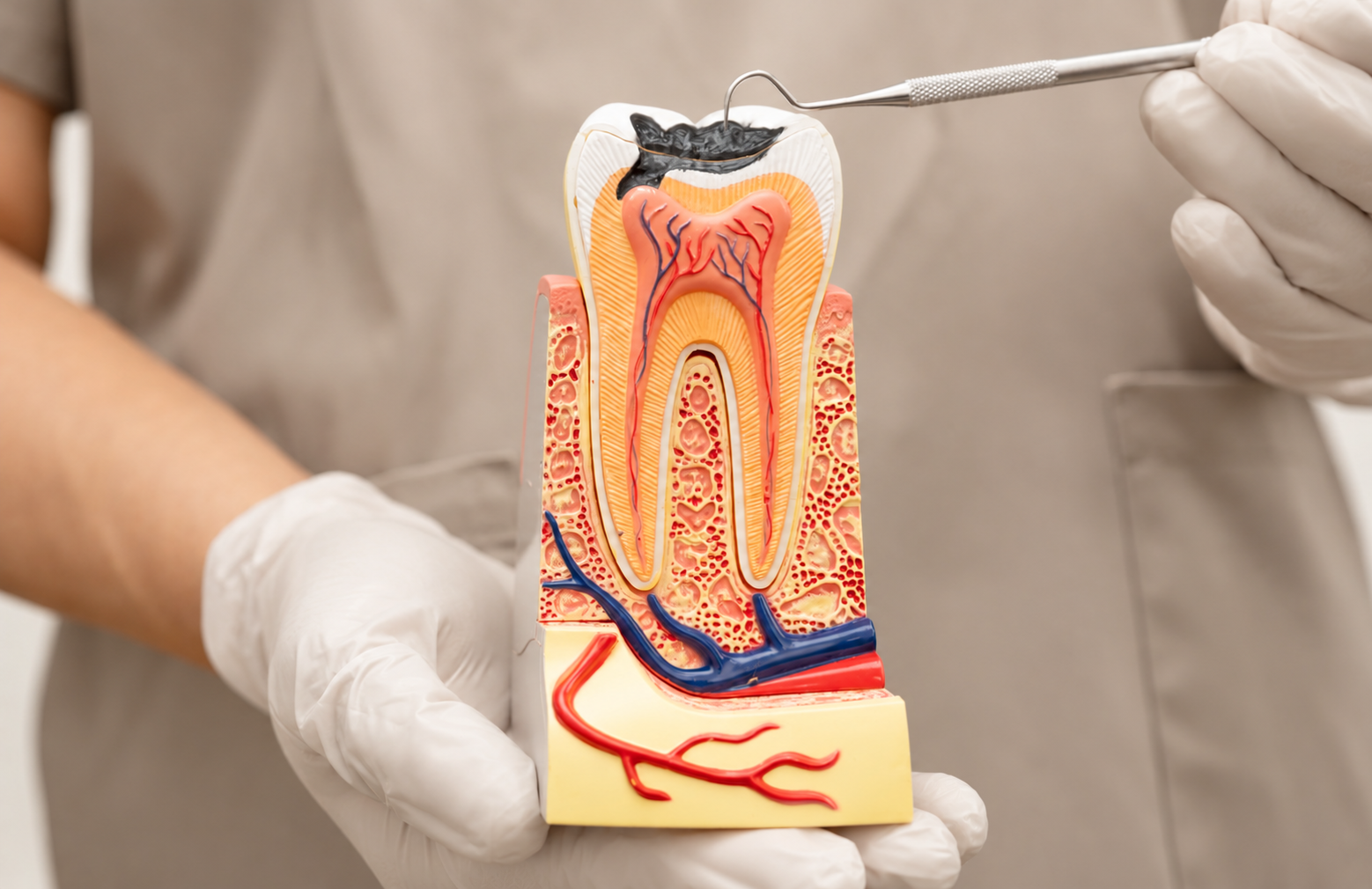
Deep decay, cracks or injuries can damage the soft tissue inside a tooth, known as the dental pulp. When this tissue becomes inflamed or infected, it can cause persistent toothache, sensitivity or swelling.
Root canal treatment removes the affected pulp, then cleans and seals the canals inside the tooth. At Glenvale Dental, we assess whether root canal treatment can help manage the infection and preserve your natural tooth rather than having it removed.
Is Root Canal Treatment Right for You?
Root canal treatment may be needed when the pulp inside a tooth is severely inflamed or infected. Symptoms vary, and some infected teeth cause little or no pain. A dental examination and X-rays can help determine whether treatment is necessary.
Persistent Toothache or Sensitivity
Throbbing pain, discomfort when biting or sensitivity to hot and cold that lingers after the stimulus is removed may indicate inflammation or infection inside the tooth. Pain may also occur without an obvious trigger.
Swollen Gums or Dental Abscess
Swelling around a tooth, a small pimple-like bump on the gum or tenderness in the surrounding area may indicate a dental infection. These symptoms need prompt assessment, even if the pain comes and goes.
Deep Decay, Cracks or Injury
Deep cavities, cracked teeth or dental injuries can expose or damage the pulp. In some cases, the tooth may darken or become infected without causing significant pain. Your dentist can assess whether the tooth can be saved.
Benefits of Root Canal Treatment
Keep Your Natural Tooth
Saving a tooth allows you to maintain its position in your mouth and continue using it for biting and chewing. It may also avoid the need for a replacement, such as a dental implant or bridge.
Keep Your Natural Smile
Whitening changes tooth colour without reshaping your teeth. If you’re happy with their shape and position, it may be all you need to improve their appearance.
Guidance for Your Teeth
Your dentist considers existing sensitivity, dental work and the cause of staining before recommending treatment, with advice on managing discomfort and maintaining your results.
Meet our Dentist
Get to know the people who’ll welcome you and care for you at Glenvale Dental.
Learn about our team’s backgrounds and approach to patient care before your first visit.

What Is The Root Canal Treatment Process?


Examine Your Tooth
Your dentist examines the affected tooth and takes X-rays to assess the roots and surrounding bone. We'll explain whether root canal treatment is suitable and discuss the treatment plan with you.


Remove the Infected Pulp
After numbing the area with local anaesthetic, your dentist isolates the tooth with a protective rubber dam. The inflamed or infected pulp is removed, and the root canals are carefully cleaned and shaped.


Fill and Seal the Canals
Once the canals have been disinfected, they are filled with a special material and sealed to reduce the risk of reinfection. Treatment may take more than one appointment, depending on the tooth and infection.

Restore and Protect the Tooth
The tooth is restored with a filling or dental crown, depending on how much healthy tooth structure remains. Your dentist will explain any follow-up care needed to protect the treated tooth.
Frequently Asked Questions
-
Root canal treatment is performed under local anaesthetic to numb the tooth and surrounding area. Most patients feel pressure or movement rather than sharp pain during the procedure. Some tenderness afterwards is normal and usually settles within a few days.
Contact your dentist if the pain is severe, worsening or not improving.
-
Root canal treatment may require one or several appointments, depending on the tooth, the number of root canals and the extent of infection. Molars often have more complex root canal systems than front teeth.
Your dentist can provide a clearer treatment timeline after examining your tooth.
-
The cost depends on which tooth needs treatment, the complexity of its root canals and the number of appointments required. A filling or dental crown may also be needed afterwards.
At Glenvale Dental, we can assess your tooth and explain the recommended treatment and associated costs before proceeding.
-
Root canal treatment can save many infected teeth by removing the affected pulp and sealing the root canals.
However, treatment is not suitable for every tooth. Severe fractures, insufficient remaining tooth structure or other dental problems may make extraction a more appropriate option.
-
Not every root canal-treated tooth needs a crown. Back teeth often require additional protection because they handle stronger chewing forces, particularly when substantial tooth structure has been lost.
Your dentist will assess whether a filling or crown is the most suitable way to restore your tooth.
-
Pain may improve after the infected pulp is removed, but this does not mean the treatment is complete. Without proper cleaning, filling, sealing and final restoration, bacteria may remain or re-enter the tooth.
This can lead to further infection and increase the risk of tooth damage or eventual extraction.
-
You should wait until any local anaesthetic has worn off to avoid accidentally biting your cheek or tongue. If your tooth has a temporary filling or has not yet received its final restoration, avoid chewing hard or sticky foods on that side.
Your dentist will provide instructions based on your treatment.
-
A successfully treated tooth can remain functional for many years, sometimes for a lifetime. Its longevity depends on the amount of remaining tooth structure, the quality of the final restoration, oral hygiene and biting forces. Regular dental check-ups help identify problems before they become more serious.